**LIMITED TIME OFFER: TAKE $100 OFF PER CONTAINER (PURCHASE ONLY)!**


How Much Does a Used Shipping Container Weigh?
Understand the tare weight, payload capacity, and gross weight of used shipping containers and why these weights are essential for transport, storage, and structural planning.

This is one of the most frequently asked questions our agents receive at Eveon. If you’re exploring [shipping containers](https://www.eveoncontainers.com/en-US/shipping-container-for-sale) for storage, transportation, or repurposing into a home or office this also may be a question you are curious to explore. Whether you’re choosing a [20ft container](https://www.eveoncontainers.com/en-US/used-20ft-shipping-container), a standard [40ft container](https://www.eveoncontainers.com/en-US/used-40ft-shipping-container), or a taller [40ft High Cube container](https://www.eveoncontainers.com/en-US/used-40ft-high-cube-shipping-container), understanding the weight is important for logistics, transportation, and structural planning. In this article, we break down the tare weight (not tear) payload capacity, and gross weight of these commonly used containers.
## Why Container Weight Matters
Understanding how much a [used shipping container weighs](https://www.eveoncontainers.com/en-US/resources/shipping-container-types-and-specifications) is crucial for:
- **Transportation planning:** Ensuring your truck, trailer, or crane can handle the weight.
- **Shipping logistics:** Staying within road and sea freight limits.
- **Structural engineering:** Especially for container homes or stacked installations.
- **Permits & regulations:** Local guidelines may have weight limits or require notification for heavy structures.
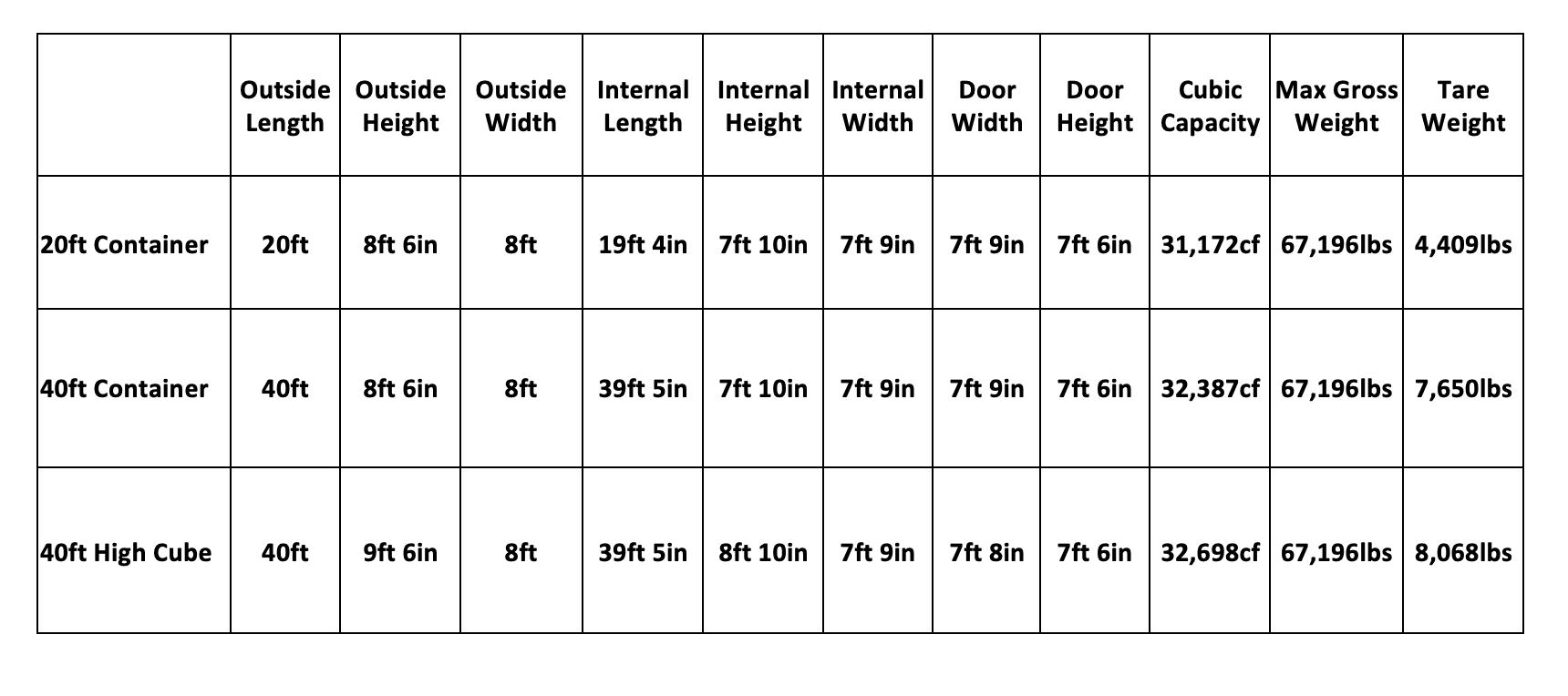
What Is Shipping Container Weight?
Shipping container weight is typically measured in three ways. All weights are typically given in kilograms (kg) and pounds (lbs) for convenience and can be found right on the doors of a container on the CSC plate.
- ### Tare Weight The weight of the empty container.
- ### Payload (Net) Capacity The maximum cargo weight the container can carry.
- ### Gross Weight The combined weight of the container plus its maximum cargo load.

## 20ft Shipping Container Weight
The 20ft shipping container is one of the most popular sizes for personal and commercial use. A used 20ft container might weigh slightly less or more depending on its age, modifications, and condition.
- **Tare Weight:** 2,050 kg (4,520 lbs)
- **Payload Capacity:** 28,430 kg (62,710 lbs)
- **Maximum Gross Weight:** 30,480 kg (67,200 lbs)

## 40ft Shipping Container Weight
The 40ft standard shipping container offers double the space of a 20ft container, but it’s not double the weight. These containers are widely used for international freight and large-scale storage needs.
- **Tare Weight:** 3,750 kg (8,270 lbs)
- **Payload Capacity:** 26,730 kg (58,930 lbs)
- **Maximum Gross Weight:** 30,480 kg (67,200 lbs)

## 40ft High Cube Shipping Container Weight
The 40ft High Cube shipping container is similar to the standard 40ft container but offers an extra foot (about 30cm) in height, making it ideal for storing taller items or converting into container homes. Because of the added height and steel required in the structure, High Cube containers weigh slightly more than standard 40ft containers.
- **Tare Weight:** 3,900 kg (8,600 lbs)
- **Payload Capacity:** 26,580 kg (58,590 lbs)
- **Maximum Gross Weight:** 30,480 kg (67,200 lbs)
Choosing the Right Container for Your Needs
When comparing the 20ft vs 40ft vs 40ft High Cube shipping containers, consider not just how much they weigh, but also how much they can carry and how they fit your usage scenario. Whether you’re buying for shipping, storage, or building, knowing the exact weight of a used container can help avoid logistical headaches down the road.

20ft Used Container
Weight
Tare
4,520 lbs
Capacity
62,710 lbs
Maximum Gross
67,200 lbs
Performance
Personal & Commercial Use

40ft Used Container
Weight
Tare
8,270 lbs
Capacity
58,930 lbs
Maximum Gross
67,200 lbs
Performance
International Freight & Large-Scale Storage

40ft Used High Cube Container
Weight
Tare
8,600 lbs
Capacity
58,590 lbs
Maximum Gross
67,200 lbs
Performance
Storing Tall Items & Container Homes
Frequently Asked Questions
- A shipping container is retired, or [decommissioned](https://www.eveoncontainers.com/en-US/when-is-a-shipping-container-retired), when it is no longer economically viable or fails to meet international shipping standards. This typically occurs after 10–13 years of use, though some containers may last up to 20 years with proper maintenance. Retirement can result from failing safety inspections, structural damage, corrosion, or design changes. These containers often find new life on land as storage units, offices, homes, or shelters.
- The ideal [foundation for a shipping container](https://www.eveoncontainers.com/en-US/building-the-perfect-foundation-for-a-shipping-container) depends on its intended use and the site's conditions. A proper foundation ensures structural integrity, facilitates door operation, and extends the container's lifespan. - Gravel Pad: A popular, cost-effective choice offering excellent drainage and ease of installation. - Compacted Dirt: Suitable for temporary setups; however, it may lead to drainage issues and structural instability over time. - Concrete Pad: The most durable option, providing a stable and level base ideal for permanent installations or heavy loads.
- [Shipping container doors](https://www.eveoncontainers.com/en-US/understanding-and-maintaining-shipping-container-doors) can become difficult to open due to unleveled foundation, rust and dirt accumulation, or lack of lubrication. Regular maintenance, like cleaning the area around the door and lubricating the moving parts, and ensuring the container is properly leveled can significantly improve the functionality of the doors and extend the lifespan of your shipping container.