**Summer Sale - $100 Off Per Container (Purchase Only) - Buy Now!**


Leading Yacht Rigger Transforms Used Corten Steel Boxes Into Boatyard Container Compound
‘Inside the box’ with The Yacht Rigger

We love following our decommissioned shipping containers as they begin their new land-based futures. Some find their way to the mountains, others to farms, and in the case of our next ‘Inside The Box’ feature, a few make their way to a coastal boatyard amongst others who spent their lives maneuvering the natural forces found at sea.
## From Sea To The Worksite: Containers Reinventing Themselves for Land Based Purpose
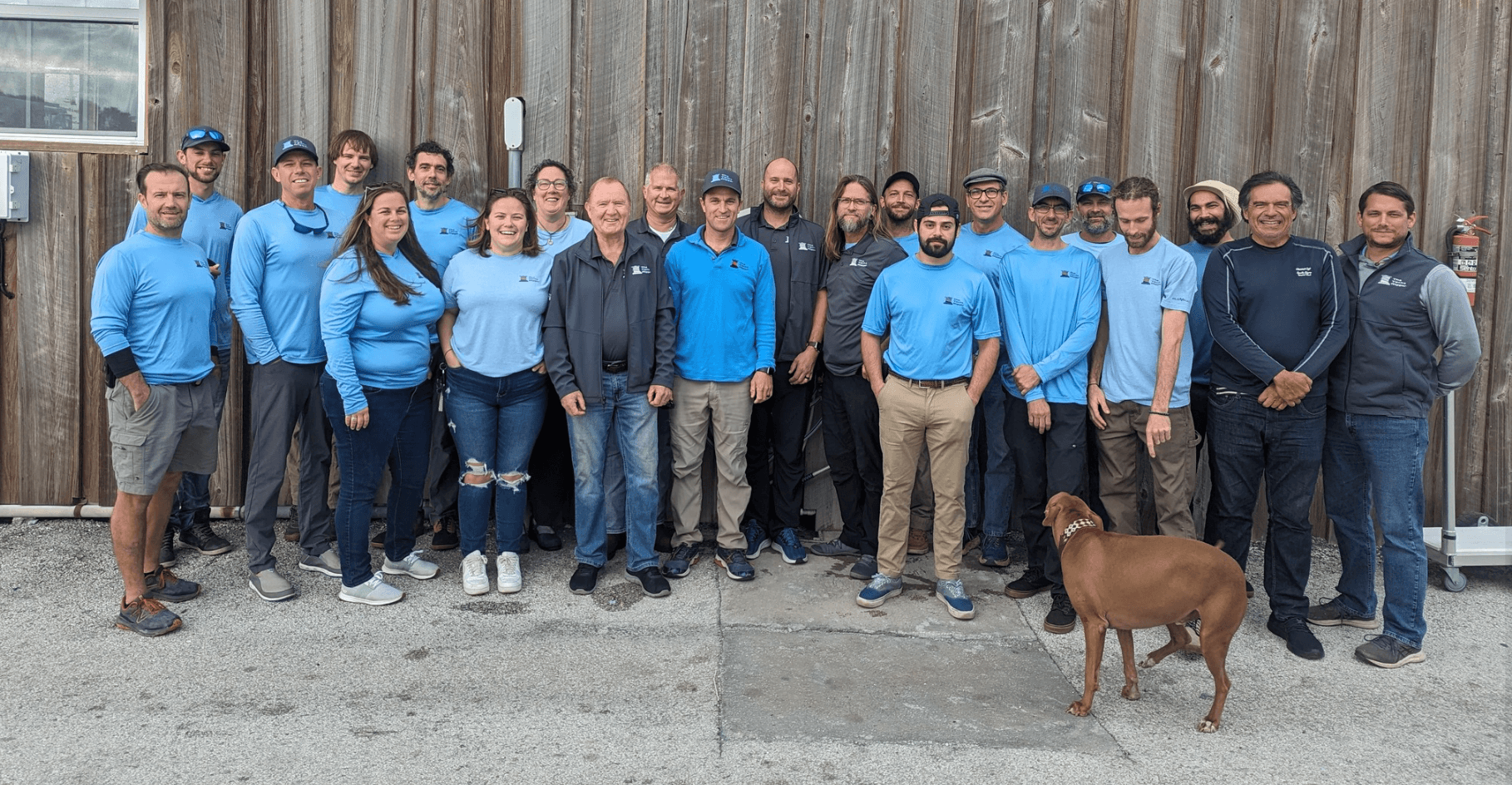
Off the west coast of Florida, we find Eveon customer, water enthusiasts, and obsessed boaters, [The Yacht Rigger]( https://theyachtrigger.com) owned by Stephen Lloyd, Brian Ford, and Andre Cormier. Located in St. Petersburg, Florida, the company is dedicated to marine upgrades and maintenance of sail and power boats, including a team of craftsmen specialized in welding, fabricating, electrical, and rigging. The business services include but should not be limited to; Marine Solar & Electrical Systems, aluminum and stainless metal fabrication, Standing Rigging Replacement, Winch Servicing, Splicing, Hardware Installation, New Sails and sail covers, Marine parts distribution, and more. The team is committed to quality customer service and attention to detail. Preventative maintenance and timely upgrades are essential to safety out on the water.
### How Shipping Containers Power The Yacht Rigger's Modular Sailboat Rigging Workshop
Preventative maintenance and timely upgrades are essential to safety out on the water. Like Eveon Containers, The Yacht Rigger believes that well-made products — properly cared for and maintained — can stay highly functional for decades. Sailing is a sport that delivers peace, focus, and a deep sense of community, but it also demands an active, detail-oriented team to keep masts, sails, and rigging hardware ready for every voyage.
Sailboat rigging sits at the heart of that work. As a vital part of sailboat safety, yacht rigging is a specialized industry that blends hands-on sailing knowledge with deep technical expertise — understanding the complex tension systems, standing and running rigging, swages, and fittings that make a sailboat's mast and sails function as one. Get any of it wrong, and the consequences can range from a ruined race day to a serious safety incident offshore.
South African expat and lead rigger Stephen Lloyd and his team at The Yacht Rigger specialize in all types of yacht rigging, from cruising boats setting out across oceans to performance racing yachts chasing tenths of a knot. Their comprehensive rigging services are tailored to each client's boat, sailing style, and goals — whether that's a full mast rebuild, a standing rigging replacement, a furler installation, or a season-readiness inspection.
### Customer Service and Attention to Detail Sailors Trust
What sets The Yacht Rigger apart isn't only the technical work — it's the care behind it. Every project starts with a conversation: the team walks the boat with the owner, listens to how it's sailed, and notes the small details that often get overlooked at busier yards. From the precise tension of a backstay to the corrosion-prone fittings hidden inside a swage, nothing is treated as routine. That same attention to detail extends to communication.
Clients get clear timelines, honest pricing, and progress updates throughout the job, so there are no surprises when the boat goes back in the water. It's the kind of customer service you'd expect from a small family operation, paired with the technical depth of a full-service rigging shop — and it's the reason owners come back season after season.
### A Modular Workshop Built From Shipping Containers
To support that level of service, The Yacht Rigger needed space — and lots of it — without committing to expensive permanent construction or open-ended monthly storage rentals. Their solution: used shipping containers from Eveon.
"Shipping containers are a simple and cost-effective solution for us to grow piece by piece, as needed, with an incredibly solid structure that lends well to many applications," Stephen Lloyd explains.
Today, the company's container compound has grown into more than twenty containers and workshops — a sustainable, affordable matrix of offices, fabrication workshops, and secure storage for masts, booms, line, and rigging hardware. The Corten steel construction stands up to coastal weather, and the modular layout means the business can scale on its own timeline: as the work grows, they simply add another container.
###
For more information on the various ways that shipping containers can help business solutions at a fraction of the cost of temporary monthly storage units [click here.](https://www.eveoncontainers.com/en-US/Industry-applications-usages)
Frequently Asked Questions
- Yes, containers can be stacked, but there are rules to follow to do it secure and safely! One great feature of shipping containers is that they can be stacked up to eight containers high, even when fully loaded. But of course, to do it safely, you have to follow a few simple rules, like stacking the containers with corner posts aligned and securing the containers with twist locks. It is advised that containers of the same size are stacked since they will be more secure. There are companies out there that have equipment to handle stacking. Please consult an expert before attempting.
- A common misconception is that the shipping container, invented by Malcom McLean to streamline and improve the efficiency of transporting goods, is a solid box. However, the floor of a container is not a single piece of solid metal or wood. Instead, it consists of marine-grade plywood laid over Corten steel-reinforced beams, providing both durability and structural integrity. Corten steel, which is the same metal used to make bridges, roofs, fencing and transmission towers, is a high-strength steel alloy that forms a rust-like appearance when exposed to the elements. This makes it particularly well-suited for use in environments where durability & resistance to corrosion are essential. The Corten Steel beams run horizontally along the entire bottom of the container like a spine, this design with the metal cross members is primarily for structural integrity, weight reduction, and efficient load distribution. When combined with Corten steel, Marine-grade Plywood flooring is durable and able to withstand the harsh conditions whether on land or sea. **Why Are Shipping Container Floors Made With Crossbeams:** - Strength & Load Bearing: The cross members act like the vertebrae of a spine, providing structural strength while allowing the floor to support heavy loads. This design helps distribute weight evenly across the length and width of the container, preventing excessive stress on any single point. - Weight Reduction: A solid metal bottom would significantly increase the container’s weight, making transportation more costly and inefficient. By using a frame structure with wooden or composite flooring panels, the container remains strong yet lightweight. Cost Efficiency: Building a container with a solid steel bottom would require more material, increasing production costs. The current design uses a combination of steel beams and plywood or bamboo flooring, balancing strength and affordability. - Forklift & Handling Accessibility: The gaps between the cross members provide access points for forklifts to lift and transport the container more efficiently. - Flexibility & Shock Absorption: Much like a spine, the cross-member structure allows slight flexing under heavy loads, preventing damage to the cargo and the container itself. A rigid solid metal bottom could be more prone to cracking or warping under stress. This design ensures that shipping containers remain durable, cost-effective, and easy to transport while maintaining the necessary strength for carrying heavy cargo. ## **The Shipping Container Floor** The shipping container floor constructed from marine-grade plywood, is engineered to resist water, rot & fungal growth, making it ideal for environments subject to moisture and fluctuating temperatures. In a shipping container, marine-grade plywood flooring provides a strong, stable surface that can handle heavy cargo while offering better insulation compared to steel. Its high resistance to moisture also makes it less likely to warp or degrade under wet conditions, ensuring long-lasting performance for storage. The numerous layers of plywood pressed together allowed it to take hits and blows without cracking. Some peeling is okay and won't affect the effectiveness if minimal. When combined with Corten steel, Marine-grade Plywood flooring is durable and able to withstand the harsh conditions whether on land or sea. Making the shipping container a perfectly functional partner in the field, worksite or farm.
- Absolutely, you have the option to select your preferred delivery date during checkout. Once your order is placed, our driver will reach out within 48 hours to coordinate scheduling and confirm the delivery dates. Your schedule and time are important to us, our carrier will work with you directly to accomidate the best delivery window for you.